
Bull Bear Market
A Third of GDP in AI Exports: What the World Bank's April 2026 Update Says About Malaysia and the AI Boom
The World Bank's April 2026 East Asia and Pacific update finds AI-related exports worth about a third of Malaysia's GDP and a data-centre pipeline above 3,000 MW, but AI barely used by firms. The numbers, the industrial-policy argument, and what it means for the AI trade.
 Akmal Alif · 10 October 2026 MYT
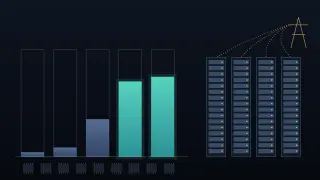
Every six months the World Bank publishes an economic update for East Asia and the Pacific. The April 2026 edition is titled Industrial Policy in the Digital Age, and its data runs to 19 March 2026 (World Bank, 2026). Its overview has a striking number for Malaysia: exports of AI-related goods equal to about a third of the country's GDP. It also has a sobering one: AI is still barely used across most of the region.
Every figure below is from the report unless marked otherwise. The report is published under a CC BY 3.0 IGO licence.
The regional picture
Developing East Asia and the Pacific is still growing faster than the world, but more slowly than before:
Economy | 2025 | 2026 forecast | 2027 forecast |
|---|---|---|---|
East Asia and Pacific | 5.0% | 4.2% | 4.4% |
China | 5.0% | 4.2% | 4.3% |
Malaysia | 5.2% | 4.4% | 4.4% |
Viet Nam | 8.0% | 6.3% | 7.6% |
Thailand | 2.4% | 1.3% | 2.3% |
The World Bank raised its 2026 forecast for Malaysia from 4.1% in October 2025 to 4.4%, even as it cut the region's.
Three outside forces shape the outlook:
An energy shock. After the conflict in the Middle East, natural-gas price indices rose about 90% and oil about 30% in the immediate aftermath. That hurts net energy importers.
US trade policy. Tariffs on exports to the United States remain above 2024 levels. The uncertainty around them holds back investment and pushes workers toward short-term and informal jobs.
The AI boom. It is spurring investment and reshaping technology supply chains.
The AI export boom
The report measures AI-related exports with the WTO's classification of AI-enabling products. That covers raw materials, processed chemicals, intermediate inputs such as processors and wafers, and equipment such as data-centre hardware. By that measure, two economies stand out:
Malaysia. AI-related exports rose from about 28% of GDP in 2023 to about 34% in 2025.
Viet Nam. They rose from about 20% to about 32%.
Thailand. They rose from about 12% to about 16%.
For comparison. The figure is about 2% of GDP for the United States and the EU, and 4% for Japan.
Semiconductors and other intermediate goods are still the backbone, but equipment exports, including data-centre hardware, have grown meaningfully. In 2025 an 18% jump in Malaysia's electronics exports offset contractions elsewhere in its exports.
Our reading: these are gross export values, not the share of value created in Malaysia, so a third of GDP overstates how much of the AI economy the country captures. The direction is still unmistakable. Malaysia sells the physical layer of the AI boom.
The data-centre build-out
Global private investment in generative AI rose from near zero in 2019 to US$34 billion in 2024. In East Asia, that money is landing as data centres:
The region's leader. In the second quarter of 2025, Malaysia had roughly 700 MW of data-centre capacity operating and a pipeline of more than 3,000 MW. That leads the region, with Indonesia and Thailand also seeing significant investment.
What drove growth. The report says private investment was a significant driver of Malaysia's growth in 2025, buoyed by new data-centre investment.
Faster approvals. The report singles out Malaysia's Green Lane Pathway. A one-stop centre and fast-tracked grid connections cut the time from application to an operating data centre from 36–48 months to about 12.
What still holds others back. Across the region, reliable infrastructure and access to finance remain the binding constraints for new data centres.
The catch: AI is barely being used
The same report finds AI diffusing slowly:
Low adoption. Only about 13–17% of multinational subsidiaries in China and Thailand use AI, compared with 37% in the United States. Adoption is concentrated in multinationals, and domestic firms lag well behind.
Few jobs that benefit. Only about 10% of jobs in the region involve tasks that complement AI, compared with about 30% in advanced economies. The difference reflects more employment in agriculture and routine manual work.
Gaps that slow it. Diffusion is held back by gaps in connectivity, skills and startup ecosystems.
The report also notes that the region's policies focus on the early stages of the AI value chain, chips and data centres, rather than on applications. It adds a lesson from earlier technology waves: most productivity gains came from how technology was used, not from building the underlying hardware.
The industrial-policy argument
The special focus argues for industrial policy in three pillars, in a deliberate order:
Foundations first. Basic infrastructure, human capital and institutions. The report notes that even Malaysia still has many children without basic literacy and numeracy.
Fix policy failures. Restrictions on services, trade and investment hold growth back. The report suggests services reform may be the most effective industrial policy of all.
Then targeted support. Subsidies, tax breaks and cheap finance can complement the first two pillars but not substitute for them. They need sunset clauses, transparent reporting and strict performance benchmarks.
It draws two contrasts. Korea's drive into heavy industry and semiconductors was effective and efficient, and Korea now produces about 22% of global chip fabrication output. China's shipbuilding support was effective but mostly inefficient: it cost more than it returned. Malaysian and Thai firms have joined semiconductor value chains, but very few Southeast Asian firms have matched Korea's innovation. In China, government procurement contracts that gave firms access to public data helped AI companies develop new commercial software.
What it means for the Tech Bull Market
Our reading of the report, for readers following the AI trade:
Malaysia is a picks-and-shovels story. Its AI exposure is chips, hardware and hosting, not models. That makes it a bet on continued AI capital spending worldwide, with the concentration risk that implies if that spending slows.
Energy is the swing factor. Data centres run on power, and the report opens with an energy-price shock. Grid capacity and energy costs will decide how much of the 3,000 MW pipeline gets built.
The upside is in use, not only in exports. On the report's own evidence, the bigger long-run prize is getting domestic firms to use AI, where the region trails badly.
This post pairs with our look at Bloomberg's chart of the US–China AI gap. Whoever wins the model race, much of the hardware it runs on is assembled, tested and hosted in Southeast Asia.
References
World Bank. (2026). Industrial policy in the digital age [Overview booklet]. East Asia and Pacific Economic Update (April 2026). World Bank. https://doi.org/10.1596/978-1-4648-2327-5