
Gaming
Sued by Nintendo: Can Gaming's Strictest Rights Holder Control What AI Does to Its IP?
Sued by Nintendo logs 86 of Nintendo's blocks, lawsuits and payouts since 1989. We bring the record up to October 2026 and ask whether takedowns still work when AI agents can decompile games, port them, maintain emulators and play by themselves, and where copyright law on AI now stands.
 Akmal Alif · 10 October 2026 MYT
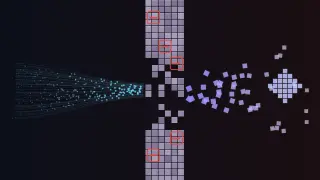
Sued by Nintendo is a fan-run archive of the times Nintendo has shut something down. It is built by a developer who signs as Cawolf from an open dataset on GitHub, and it lists 86 entries from 1989 to January 2025: fan games pulled, emulators ended, ROM sites sued, tournaments cancelled and videos claimed (Cawolf, n.d.).
The archive raises a bigger question in 2026. Nintendo's enforcement grew up in a world where decompiling a game, porting it or building an emulator took a skilled team years. AI coding agents are cutting that to weeks. Can the strictest rights holder in gaming still control what happens to its characters and code?
What the archive shows
Each entry carries one of three icons. We counted them:
Icon | Entries | Examples from the archive |
|---|---|---|
Block | 42 | AM2R blocked (2016), Smash dropped from Evo (2022), Yuzu and Citra ended (2024) |
Law | 35 | Game Genie (1991), Pokémon Uranium (2016), Super Mario 64 PC port (2020), Pocketpair (2024) |
Scales | 9 | Two ROM sites ordered to pay millions (2018), RomUniverse loses (2021), Gary Bowser pleads guilty (2021) |
Three patterns stand out:
It is about control, not only lawsuits. The "block" entries include limited-time releases, closed eShops and removed videos alongside takedowns. The archive is a record of how tightly Nintendo manages its IP, not just a list of court cases.
The peak was 2019–2022. Those four years account for 45 of the 86 entries, with 17 in 2020 alone.
The archive has thinned, Nintendo has not. After 2022 the dataset adds only a handful of entries a year. As the next sections show, the public record since then is just as busy.
Why Nintendo is so strict
Nintendo has explained itself. At its June 2026 shareholder meeting, president Shuntaro Furukawa said Nintendo will respond to anything it judges to infringe its IP, whether or not generative AI was used, and has no plans to change that policy. He added that Nintendo's characters were never standalone creations: they grew out of the particular kinds of play Nintendo designs (Nintendo, 2026).
Three things follow from that view:
The IP is the product. Nintendo now spreads its characters through films and theme parks as well as games, as Furukawa described at the same meeting. Every unlicensed Mario competes with the official one.
The console is the gate. Nintendo's emulator takedowns rest on anti-circumvention law, not on a claim that emulation itself is illegal. Its GitHub notices describe the Switch's technological protection measures, which keep pirated games off the console and keep games off unauthorised devices, and target projects that get around them (GitHub, 2026a).
It uses every legal tool. Copyright and circumvention claims against emulators and piracy, patents against Palworld, trademarks, and the contract terms of its own consoles and online services.
The archive also shows the cost: fan projects that never ship, games that become hard to preserve, and a reputation that follows Nintendo into every new controversy.
The record since the archive stops
The dataset's last entry is from January 2025. The record from 2024 to 2026 shows no softening:
Yuzu and Citra (March 2024). Yuzu's developer settled with Nintendo for $2.4 million, and the related 3DS emulator Citra went offline at the same time (Shanklin, 2024).
Ryujinx (October 2024). The Switch emulator shut down after Nintendo contacted its lead developer, without any lawsuit being filed (Washenko, 2024).
Palworld (from September 2024). Nintendo and The Pokémon Company sued Pocketpair in Tokyo over three patents, not copyright (Nintendo, 2024). Pocketpair changed the disputed mechanics in updates, and court records reported in June 2026 show the claims narrowed to older versions of the game (Fujiwara, 2026). We found no ruling reported by early October 2026.
Switch 2 terms (May 2025). Nintendo's updated user agreement lets it make services or the console "permanently unusable", in whole or in part, for unauthorised modification or circumvention (Chen, 2025).
GitHub takedown waves (2026). Nintendo's notice of 12 February listed around 350 links, mostly forks of Yuzu plus the Eden emulator. The largest of seven notices on 17 August covered about 300 repositories in the Suyu network (GitHub, 2026a, 2026b). Both rest on the same circumvention argument.
Archbox (September 2026). A US federal court awarded Nintendo $4.5 million by default judgment against a moderator of a Switch piracy subreddit: the maximum statutory damages for each of 30 games (Van der Sar, 2026).
What AI changes
Nintendo's enforcement works partly because the things it targets are expensive to make. A matching decompilation, a PC port or a working emulator used to take years of skilled work. AI is cutting that cost from four directions.
Decompilation and porting
In November 2025 developer Chris Lewis described running Claude in a loop to match functions in the N64 game Snowboard Kids 2, one function per run. Three weeks of this beat the previous three months of manual progress (Lewis, 2025). Snowboard Kids 2 is not a Nintendo game, but the method works on any title from the era.
In September 2026 the decompilation of Super Smash Bros. Melee, begun in 2020, reached 100% on the decomp.dev tracker (decomp.dev, n.d.). The announcement credited AI (Claude) for help, and many fans objected (Tsagkarakis, 2026).
A wave of fast, AI-built ports followed. Developers of the human-made Zelda and Banjo recompilation projects call them "slopcomps": buggy, untested and hard to maintain (Gach, 2026).
Other publishers moved first. Bethesda sent a cease-and-desist over an AI-built Fallout recreation, and Activision acted against an AI-assisted PC decompilation of Modern Warfare 2 (Roosevelt, 2026). We found no Nintendo notice on GitHub in 2025–26 aimed at a decompilation or recompilation project. That is not tolerance: the archive records Nintendo taking down a Super Mario 64 PC port in 2020.
Our earlier posts cover how LLMs are rewriting game modding and emulation and how AI game mashups work.
Agentic coding
Emulators are code, and code is getting cheap. The 2026 takedown waves were mostly forks of emulators that Nintendo had already stopped in 2024. Forking predates AI, but coding agents make it easier for a small team, or one person, to keep a fork alive, fix it or rebuild missing parts. A takedown removes copies. It does not remove the knowledge, and agents can now apply that knowledge quickly.
Computer use
AI agents can now play games through the screen, as a person does. Anthropic streamed Claude playing Pokémon Red on Twitch in February 2025 (Silberling, 2025), and Google's Gemini finished Pokémon Blue in May 2025 with some help from the tools its developer built around it (Ha, 2025). The same ability can test, grind, farm or cheat at scale. Nintendo's tools here are its online terms and bans, and AI does not change those.
Generated characters
When OpenAI launched Sora 2 on 30 September 2025, users quickly generated well-known Japanese characters. Within days Sam Altman promised rights holders more granular control, closer to opt-in, and a share of revenue (Altman, 2025). On 10 October Japan's minister for IP strategy, Minoru Kiuchi, said the government had asked OpenAI not to infringe copyright, calling anime and manga irreplaceable treasures that Japan is proud of (Cabinet Office, 2025). On 28 October the Content Overseas Distribution Association (CODA), which represents Japanese rights holders in fields including anime and video games, published a written request asking OpenAI not to train Sora 2 on its members' works without permission (Content Overseas Distribution Association, 2025).
Where the law stands
Authorship in the US. The US Copyright Office says prompts alone do not make someone an author. Human expression that is perceptible in the output, or creative selection and arrangement, can be protected (U.S. Copyright Office, 2025a). An AI-built port may give its makers little protection of their own, while still infringing Nintendo's work if it copies it.
Training in the US. The Office's report on training says fair use is decided case by case. Research and analysis are more likely to be fair. Commercial use of huge numbers of works to make competing content, especially from pirated copies, goes beyond it (U.S. Copyright Office, 2025b).
The 2025 rulings. In June 2025 two federal judges in San Francisco sided with AI firms on training, with limits. In Bartz v. Anthropic, training on purchased books was fair use but keeping a library of pirated books was not; the case later settled for $1.5 billion (Bialek, 2026). In Kadrey v. Meta, Meta won because the authors had not shown market harm, but the judge left room for a "market dilution" argument (Authors Alliance, 2025).
Japan. Article 30-4 of the Copyright Act allows works to be used for purposes other than enjoying them, such as AI training, without permission. It does not apply when an enjoyment purpose coexists, for example fine-tuning a model to reproduce a creator's expression, or when the use would unreasonably harm the rights holder (Agency for Cultural Affairs, 2024).
The common thread is that the law is looser about training and stricter about outputs. That suits Nintendo, because what it polices are outputs and distribution: a recognisable character, a copied game, a key that unlocks it.
Can Nintendo control it?
Partly, and less each year.
What Nintendo can still control:
Choke points that AI does not make cheaper. Console keys and circumvention; the platforms that host and distribute code, video and apps; its own hardware and online services; and the money, from piracy-device sellers to pirate shops.
AI companies. Large AI firms respond to rights-holder and government pressure, as the Sora episode showed.
Patents and trademarks. These do not depend on how a copy was made.
What it cannot:
Volume. Takedowns remove copies, not know-how. When agents make rebuilding fast, each notice buys less time.
Private use. Models and tools running on a player's own machine leave nothing for a takedown notice to target.
Ideas. Copyright protects expression, not game mechanics. The Palworld case was brought on patents, not copyright, and even its claims narrowed after Pocketpair changed the game.
The likely result is that enforcement moves further away from code and towards distribution, keys, accounts and money. Sued by Nintendo will keep growing. The gap between what fans can make and what Nintendo can take down will grow faster.
What this means for modders and developers
This is not legal advice, but the record points one way:
AI does not launder infringement. If the output reproduces Nintendo's code, characters or assets, Nintendo treats it the same as if a person wrote it. It has said so.
Distribution is where the risk is. Sharing keys, game files or ready-to-play builds is what draws notices and lawsuits.
Disclose AI use. The Melee and "slopcomp" arguments show that communities care about credit and code quality, not only legality.
Original work is safest. Mechanics inspired by Nintendo are usually fair game, but patents can still apply, as Palworld shows.
References
Agency for Cultural Affairs. (2024). General understanding on AI and copyright in Japan: Overview. Japan Copyright Office. https://www.bunka.go.jp/english/policy/copyright/pdf/94055801_01.pdf
Altman, S. (2025, October 3). Sora update #1. https://blog.samaltman.com/sora-update-number-1
Authors Alliance. (2025, June 26). Meta wins on fair use for now, but court leaves door open for "market dilution". https://www.authorsalliance.org/2025/06/26/meta-wins-on-fair-use-for-now-but-court-leaves-door-open-for-market-dilution/
Bialek, A. (2026, July 22). Judge approves record $1.5 billion AI copyright settlement involving Anthropic. JURIST. https://www.jurist.org/news/2026/07/judge-approves-record-1-5-billion-settlement-involving-anthropic/
Cabinet Office, Government of Japan. (2025, October 10). Press conference summary, Minister of State for Special Missions Kiuchi [in Japanese]. https://www.cao.go.jp/minister/2411_m_kiuchi/kaiken/20251010kaiken.html
Cawolf. (n.d.). Sued by Nintendo. Retrieved October 10, 2026, from https://www.suedbynintendo.com/
Chen, J. (2025, May 10). Nintendo grants itself the power to brick Switches with pirated games. Engadget. https://www.engadget.com/gaming/nintendo/nintendo-grants-itself-the-power-to-brick-switches-with-pirated-games-162129077.html
Content Overseas Distribution Association. (2025, October 28). CODA issues written request to OpenAI regarding Sora 2. https://coda-cj.jp/en/news/817/
decomp.dev. (n.d.). Super Smash Bros. Melee [Decompilation progress tracker]. Retrieved October 10, 2026, from https://decomp.dev/doldecomp/melee
Fujiwara, H. (2026, June 12). Nintendo and The Pokémon Company have reportedly narrowed Palworld lawsuit to older versions of the game only, likely thanks to "preventive" updates by Pocketpair. Automaton. https://automaton-media.com/en/news/nintendo-and-the-pokemon-company-have-reportedly-narrowed-palworld-lawsuit-to-older-versions-of-the-game-only-likely-thanks-to-preventive-updates-by-pocketpair/
Gach, E. (2026, October 5). Zelda and Banjo Recompiled devs go to war with AI vibe-coded "slopcomps." Kotaku. https://kotaku.com/zelda-and-banjo-recompiled-devs-go-to-war-with-ai-vibe-coded-slopcomps-2000739936
GitHub. (2026a, February 12). 2026-02-12-nintendo [DMCA takedown notice]. github/dmca. https://github.com/github/dmca/blob/master/2026/02/2026-02-12-nintendo.md
GitHub. (2026b, August 17). 2026-08-17-nintendo [DMCA takedown notice]. github/dmca. https://github.com/github/dmca/blob/master/2026/08/2026-08-17-nintendo.md
Ha, A. (2025, May 3). Google's Gemini has beaten Pokémon Blue (with a little help). TechCrunch. https://techcrunch.com/2025/05/03/googles-gemini-has-beaten-pokemon-blue-with-a-little-help/
Lewis, C. (2025, November 27). The unexpected effectiveness of one-shot decompilation with Claude. https://blog.chrislewis.au/the-unexpected-effectiveness-of-one-shot-decompilation-with-claude/
Nintendo Co., Ltd. (2024, September 19). Filing lawsuit for infringement of patent rights against Pocketpair, Inc. https://www.nintendo.co.jp/corporate/release/en/2024/240919.html
Nintendo Co., Ltd. (2026, June 26). The 86th Annual General Meeting of Shareholders: Q&A summary. https://www.nintendo.co.jp/ir/pdf/2026/qa2606e.pdf
Roosevelt, N. (2026, October 3). Viral Fallout and MW2 AI decompilation projects hit with DMCA. TheGamer. https://www.thegamer.com/ai-vibecoded-decompilations-takedown-fallout-mw2-dmca/
Shanklin, W. (2024, March 4). Makers of Switch emulator Yuzu quickly settle with Nintendo for $2.4 million. Engadget. https://www.engadget.com/makers-of-switch-emulator-yuzu-quickly-settle-with-nintendo-for-24-million-203204698.html
Silberling, A. (2025, February 25). Anthropic's Claude AI is playing Pokémon on Twitch — slowly. TechCrunch. https://techcrunch.com/2025/02/25/anthropics-claude-ai-is-playing-pokemon-on-twitch-slowly/
Tsagkarakis, G. (2026, September 10). Six years later, Super Smash Bros. Melee has been fully decompiled — and it plays on PC. eGamers. https://egamers.io/six-years-later-super-smash-bros-melee-has-been-fully-decompiled-and-it-plays-on-pc/
U.S. Copyright Office. (2025a). Copyright and artificial intelligence, Part 2: Copyrightability. https://www.copyright.gov/ai/Copyright-and-Artificial-Intelligence-Part-2-Copyrightability-Report.pdf
U.S. Copyright Office. (2025b). Copyright and artificial intelligence, Part 3: Generative AI training (Pre-publication version). https://www.copyright.gov/ai/Copyright-and-Artificial-Intelligence-Part-3-Generative-AI-Training-Report-Pre-Publication-Version.pdf
Van der Sar, E. (2026, September 25). Nintendo wins $4.5 million judgment against r/SwitchPirates mod "Archbox." TorrentFreak. https://torrentfreak.com/nintendo-wins-4-5-million-judgment-against-r-switchpirates-mod-archbox/
Washenko, A. (2024, October 1). Switch emulator Ryujinx is kaput after Nintendo pressure. Engadget. https://www.engadget.com/gaming/nintendo/switch-emulator-ryujinx-is-kaput-after-nintendo-pressure-211524968.html