
Neuromorphic
Is AI Intelligent, or Only Said to Be? A Malaysian Critique of AGI from the Islamic Intellectual Tradition
A 2025 paper in Afkar by Khalif Muammar A. Harris and Muhammad Ikhwan Azlan separates intelligence from intellect and argues that AGI rests on a materialist view of mind. A summary with page references, links to the paper and a short reading.
 Akmal Alif · 8 October 2026 MYT
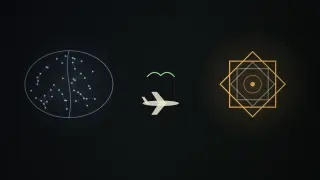
Most arguments about artificial general intelligence happen between engineers who think it is close and engineers who think it is further away. A 2025 paper from Malaysia steps outside that frame. The Question of Intelligence in the Philosophy of Artificial Intelligence, by Khalif Muammar A. Harris and Muhammad Ikhwan Azlan of the Raja Zarith Sofiah Centre of Advanced Studies on Islam, Science and Civilisation (RZS-CASIS) at Universiti Teknologi Malaysia, asks what the word “intelligence” means when we apply it to machines, and answers from the Islamic intellectual tradition (A. Harris & Azlan, 2025).
The paper was published in Afkar: Jurnal Akidah & Pemikiran Islam, volume 27, issue 1 (pages 427–462), on 30 June 2025, as an open-access article under a Creative Commons BY-NC licence. Its content was first presented at a December 2024 seminar on national AI talent development, organised by UTM's Faculty of Artificial Intelligence and Malaysia's Ministry of Higher Education (p. 427).
Read the paper: article page · full text (PDF) · DOI 10.22452/afkar.vol27no1.11
It belongs in Neuromorphic because its target is the premise underneath brain-inspired computing: that the mind is what neurons do, so a sufficiently complex network of artificial neurons could, in principle, think. This post summarises the argument with page references, then offers a short reading of where it lands.
The question
The paper starts where the philosophy of AI starts: can a machine think? It notes that Alan Turing, in Computing Machinery and Intelligence, effectively replaced that question with a different one, whether machines can do what we, as thinking beings, can do. The authors read that shift as a recognition that the two questions are not the same (pp. 429–430, 440).
Herbert Simon took the stronger view. In 1958, Simon and Allen Newell wrote that there were already machines that think, learn and create, and that their range would soon match the human mind's. Behind that claim, the authors argue, is the assumption that the brain is a physical system with nothing mysterious about it, so that “intelligence is information processing” (pp. 430–431). The paper's own questions follow: whether the “intelligence” in artificial intelligence refers to the same rational faculty that has long defined human beings, and whether anything physical, made complex enough, could give rise to it (p. 432).
The AGI discourse it answers
The authors survey the contemporary case for AGI and superintelligence (pp. 432–437):
John Searle's definition of “strong AI”, a programmed computer that would have a mind in exactly the sense humans do;
Genesis by Henry Kissinger, Craig Mundie and Eric Schmidt, which anticipates conscious, self-aware AI, and Schmidt's forecast of AGI within a few years;
Ray Kurzweil's prediction of human-level AI by 2029 as a new stage of evolution;
Nick Bostrom's and Stephen Hawking's warnings about superintelligence;
Yuval Noah Harari's argument that AI is not a tool but an agent;
Mustafa Suleyman's view that what matters is what a system can perform, not whether it truly thinks.
The authors pay particular attention to that last point. Defining AGI by performance quietly concedes that a machine need not have reason, consciousness or feeling, only the ability to do what humans do (p. 437).
Intelligence versus intellect
The conceptual heart of the paper is a distinction between intelligence and intellect. The authors note that “intelligence” entered English only in the late fourteenth century as a word for the human capacity to understand, a manifestation of the intellect. It has since been extended to animals and now to machines (pp. 437–438).
The paper traces the confusion to the mechanical philosophy of the seventeenth century. Descartes treated animals as machines and located the meeting of mind and body in the pineal gland; Hobbes went further and described humans themselves, intellect included, as automata of springs and wheels (pp. 438–439). The authors call the result the secularisation of man and of the intellect: a view in which the mind is a physical mechanism and the soul has no place (p. 440).
Critics from within Western philosophy
The authors build on Western critics of strong AI (pp. 440–443):
Hubert Dreyfus, whose 1965 RAND report Alchemy and Artificial Intelligence accused AI researchers of chasing a philosopher's stone, and who argued that thinking requires being in the world, with context that machines lack;
John Searle, whose Chinese Room argument separates producing the right outputs from understanding them, and simulating a mind from having one;
Noam Chomsky, who argued in 2012 that statistical pattern-finding does not replicate human cognition.
The paper notes that these critiques remain at the margins of today's mainstream discussion, and sets out to extend them (p. 443).
The intellect as a spiritual substance
The extension comes from the Islamic tradition (pp. 443–450). The Quran, the authors write, speaks of understanding as a function of the heart, treating intellect (ʿaql) and heart (qalb) as closely joined, and presents human beings as moral agents endowed with knowledge. Al-Ghazālī (1058–1111) describes intellect, heart, soul and spirit as one spiritual entity seen from different sides, according to its different functions. On this view the intellect is not the brain and the brain is not the intellect, but neither works without the other: the brain is where the intellect operates (pp. 444–445).
Syed Muhammad Naquib al-Attas (b. 1931) develops this further. Al-Attas describes man as spirit, soul, heart and intellect manifested in bodily form, with a faculty that apprehends universal meanings, articulates them in language and makes judgements of truth and falsehood. The authors stress the phrase “formulation of meaning” as the point of difference: creating knowledge is not the same as collecting and processing information, however impressive machines are at the latter (pp. 445–447).
The paper also takes an epistemological position. Sense perception alone and reason alone cannot establish the nature of the intellect; revelation is the source, and reason and empirical evidence then confirm it. Alongside empirical and rational knowledge, the tradition recognises intuitive knowledge received directly by the heart (pp. 449–452).
The conclusions
From these premises the authors draw firm conclusions (pp. 452–458):
AGI and superintelligence are implausible. They rest on the view that the intellect is an information processor and knowledge is only empirical.
“Intelligence” in AI is metaphorical. The paper's analogy is flight: we say an aeroplane flies, but it does not fly as a bird does, by its own will; it is flown, and depends on a pilot and fuel. AI is called intelligent because it performs tasks intelligent people perform, not because it has an intellect (p. 454).
AI is not value-free. Its dominant discourse, the authors argue, carries secular and materialist assumptions about what human beings are.
Be wary of “agentic AI”. Agency, in the paper's sense, follows from intellect and consciousness. Machines are not moral agents, so responsibility always stays with the people behind them (p. 456).
Develop AI with moderation and ethics. The authors call for AI whose purposes and methods are aligned with Islamic ontology, epistemology, ethics and law, and directed at human well-being rather than at proving human greatness (p. 457).
The paper closes by pointing to the obstacles AI researchers themselves acknowledge, such as generalisation, cross-domain reasoning and adaptability, and predicts that the meaning of “intelligence” will be stretched to fit whatever machines can do (p. 458).
A reading from where we stand
Two of the paper's moves are useful whatever one's worldview. The first is keeping performance and being apart. “Can it do what we do?” and “Is it what we are?” are different questions, and a great deal of confusion in public debate comes from sliding from one to the other. The aeroplane analogy is a memorable way to hold that line. The second is the insistence that responsibility does not transfer to machines. As AI systems take more actions on people's behalf, accountability has to stay with the people and institutions that deploy them, whatever we call the systems.
Readers should also be clear about the paper's foundations. Its central claim, that the intellect is a spiritual substance knowable with certainty through revelation, is a theological premise. Readers who share it will find the conclusions follow; readers who do not will treat the paper as a statement of a tradition's position rather than a proof. Some of its empirical claims, such as that the field has reached a dead end on generalisation, describe a moving target that each new generation of models tests again. Within Neuromorphic, the paper is a valuable counterweight: a reminder that every brain-inspired system rests on assumptions about what minds are, and that those assumptions are themselves a subject for philosophy.
References
A. Harris, K. M., & Azlan, M. I. (2025). The question of intelligence in the philosophy of artificial intelligence. Afkar: Jurnal Akidah & Pemikiran Islam, 27(1), 427–462. https://doi.org/10.22452/afkar.vol27no1.11