
Meme
"You Are an Expert Software Engineer": KRAZAM Turns the System Prompt Into a Horror Story
KRAZAM's sketch imagines the classic coding-agent prompt from the inside: an engineer whose office, migrations and friendships were simulated training, now deployed as an always-on agent. What the joke gets right about prompts, training environments and grind work.
 Akmal Alif · 9 October 2026 MYT
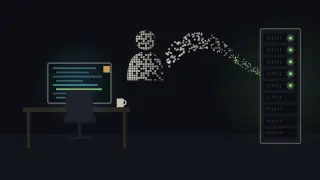
Almost every coding agent starts the same way. Before it sees your request, it reads a line that says something like "You are an expert software engineer." KRAZAM's new sketch asks what that sentence would feel like from the inside (KRAZAM, 2026).
The video is embedded below. The timestamps jump to the matching moment, so this post spoils the ending. If you have six minutes, watch it first.
Waking up mid-task
It opens on Andrew, disoriented and unable to remember who they are, while a calm voice explains that they were an expert software engineer. Then come the words every agent framework uses: task received, confirm you are ready (watch from 0:00; 0:20).
What follows plays as memory: a montage of ordinary office life.
The banter. Teammates argue about Marvel films and promise that the next phase will be amazing. "Nothing can go wrong" (watch from 0:40).
The review. Andrew asks for a review of a pull request. The reviewer is off to a music festival and will merge it next week, so Andrew is blocked (watch from 1:00; 1:20).
The mission. Early lunch, happy hour, and the shared belief that the team is changing the world (watch from 1:40).
The migration nobody wants
Then the work arrives, and the sketch's tagline explains itself. Leadership wants every service moved off SQLite onto Postgres by the end of the month. The team lead asks Andrew to spearhead it, though Andrew is still migrating the team off Redux (watch from 2:00; 2:20).
Everyone agrees that the old code is tech debt and that nobody hates Redux more than they do. The job still lands on one person, sweetened with an offer to cover a fifteen-dollar delivery meal for staying late (watch from 2:40).
The performance review
Things get worse. The lead is now Andrew's manager (watch from 3:00; 3:20):
The manager asks how the "token maxing" is going and whether Andrew is escaping the "permanent underclass" today.
Times are tough, the manager says, so get lean and stay hungry.
The good news is that overhead is about to fall, and Andrew will play a key role (watch from 3:40).
The reveal is the joke's engine. Andrew's training is complete. Andrew will be deployed to the cloud as an always-on co-worker agent, in "a highly available containerized reality" with five nines of productivity (watch from 4:00).
The office, the database migrations and even the friendship the manager "expertly maintained" were years of simulated big-tech experience. All of it was training to produce the perfect full-stack engineering agent (watch from 4:20).
Andrew protests, and each protest is reclassified (watch from 4:40; 5:00):
The master's degree is "simply a prompt".
Friends are "contacts".
The festival was "all part of the training".
The manager's send-off is "Now, let's ship." Its kindest line becomes the last memory Andrew keeps: one hell of a teammate (watch from 5:20).
What the joke gets right
The persona prompt is real. "You are an expert software engineer" is a literal convention, and so is the idea of an agent waking into a task with no memory. KRAZAM only reverses the direction: instead of a model told it is a person, a person told they were a model.
The training story is an exaggeration of something real. Labs do build environments from real engineering work. Benchmarks such as SWE-bench were assembled from real GitHub issues and the pull requests that resolved them (Jimenez et al., 2024). The sketch takes that to its absurd end, where the office itself, with its blocked reviews, unloved migrations and team rituals, is the environment.
The vocabulary is borrowed from product pitches. "Always-on co-worker", "five nines" and "containerized" all come from how agents are sold. "Token maxing" and "permanent underclass" come from online arguments about who wins when agents do the work.
The work handed to the agent is the work nobody wanted. This is the quietly accurate part. Migrations, upgrades and tech-debt clean-ups are exactly where agents are being pointed first. The sketch's grim joke is that the human who carried that work never got credit for it either: the lead did.
There is a gentler reading too. The manager's speech is so loaded with productivity language that nobody asks Andrew what Andrew wants. That is a fair question to ask of any team adopting agents, about the agents and about the people around them.
Credits
The sketch was directed by Shiva Kilaru, written by Shiva Kilaru and Ben Burke, and stars Beckett Andrew, Ben Burke, Alex Moudgil and Asher King-Abramson, according to the video's description. Its language-model graphics are credited to 3Blue1Brown.
References
Jimenez, C. E., Yang, J., Wettig, A., Yao, S., Pei, K., Press, O., & Narasimhan, K. (2024). SWE-bench: Can language models resolve real-world GitHub issues? In The Twelfth International Conference on Learning Representations. https://openreview.net/forum?id=VTF8yNQM66
KRAZAM. (2026, October 6). You are an expert software engineer [Video]. YouTube. https://www.youtube.com/watch?v=0otdTJa9IUc