
Gaming
Ray-Traced Caustics, Rigid-Body Blood and Pen-and-Paper Design: An Indie Engine Thread on Why AI Still Needs Care
An indie developer's Threads update: ray-traced water caustics on an M5 Max, a GPU rigid-body solver for particles, artery-aware blood decals, and a design process that starts on paper. The argument: AI helps, but vision, creativity and patience still have to come from you.
 Akmal Alif · 9 October 2026 MYT
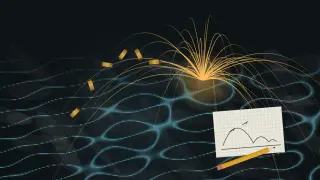
Most AI-and-games posts that go viral are a single clip with a single claim: a model one-shotted a game. This thread from @bennnmichael, an independent developer building their own engine and game, is the opposite. It is a long, technical progress report that ends with an argument about care (bennnmichael, 2026). We picked it because the details are the argument.
The thread is embedded below. It loads from Threads only when you choose.
What the update shows
The thread accompanies two videos of the engine running on Apple's M5 Max. There are two updates:
Water. A rendering path now does fully ray-traced water caustics, the bright, shifting patterns light makes after passing through water. The developer is candid that rivers have regressed since the last update and a fix is pending.
Visual effects. The second video shows the effects systems at around 50 to 60 percent complete.
The design choice behind it
The engine is built around one decision: hardware ray tracing is the minimum, not an optional extra. The aim is to balance two paths:
A cheap rasterised path, the conventional way games draw triangles.
A cheap ray-traced path, using the ray-tracing units built into each GPU core.
Keeping both cheap frees GPU time for something the developer cares about more: large numbers of particles that behave unpredictably.
The developer explains why. People need very few pixels to recognise an object. What makes a scene feel real is mostly motion: effects, animation and physics. So the particle system now runs a full rigid-body solver on the GPU, cheaply enough to draw a lot of particles. Ejected shell casings, blood spray, chips of debris and sparks off armour now all land correctly. The solver accounts for:
restitution (how bouncy a collision is);
drag;
torque and angular velocity, with wind resistance;
kinetic and rolling friction against the ground.
The same thinking extends to decals, the marks left on surfaces. When something hits organic tissue, the game looks up the nearest artery in a table, so blood is ejected at a plausible rate and pressure. When it reaches the ground, it wicks outwards, starts glossy and dries matte. The level of detail is the point. These are small decisions, each made deliberately, that add up to the sense that a world is physical.
The argument: AI does not supply the care
The thread credits a point from another user, @siennathesane: too many people want AI to do the thinking for them and "make a profit", and that is unfortunately most of the use cases.
The developer's answer is that if you care about what you are building, it still takes a lot of time, effort and care to get even halfway decent results. They apologise for tagging friends and explain why. Long posts tend to be skipped in favour of viral "this model one-shotted this game" posts. Their case is that building something deeper, richer, more beautiful and more enduring than a viral clip, which is what good games should aim for, needs four things you have to bring to the table:
vision;
imagination;
creativity;
patience.
You can use AI, but you still bring those.
A reply adds a detail that makes the point concrete. Asked about process, the developer says it is mostly pen, pencil and paper. Ideas are worked out on paper, photographed, dropped onto the desktop and dragged into a chat with a coding assistant. The rest is a lot of typing. The model is in the loop, but the design happens first, by hand.
Where it is heading
Gameplay details will wait. The effects system needs finishing, and the animation system needs, in the developer's words, a major second pass. For now they describe the game as real-time tactics in the style of Bungie's Myth series, with a science-fiction setting.
Why this belongs next to the slop
This week we also covered how AI game mashups are assembled from existing parts, and why that worries people. This thread is the counterweight. It shows what using AI looks like when the goal is a specific game rather than a clip:
A clear technical thesis. Hardware ray tracing as the floor, with GPU budget saved for motion.
Physical detail. Effects modelled with real physical properties.
Honesty about the work. Regressions and unfinished systems are reported, not hidden.
A human design process that the tools serve.
If you are a developer, the practical lesson is the budget argument. Decide what makes your game feel real, spend your GPU time there, and make everything else cheap enough to afford it. No model will make that decision for you.
References
bennnmichael. (2026, September 25). There's an M5 Max path now that does full RT water caustics (rivers have undergone a serious regression, however. Fix pending) [Thread]. Threads. https://www.threads.com/@bennnmichael/post/DduyPjSE36O