
Tech Bull Market
Ads in ChatGPT Were Always Coming: The Economics of Subsidized Intelligence
OpenAI is putting visual ads into ChatGPT’s image generation. Free answers cost real compute, the capital paying for them wants a return, and Europe’s Digital Services Act will now make the ads visible.
 Akmal Alif · 8 October 2026 MYT
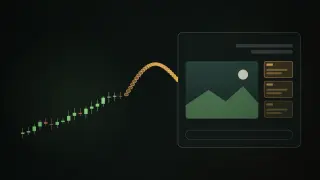
OpenAI is bringing advertising into ChatGPT’s image generation. According to The Next Web, a new visual ad format will show products in use, labelled and kept separate from the image a user asked for. Testing starts in the United States in late October 2026 with an initial group of advertisers, while ads have already run in 31 European countries since late August (Constantin, 2026). Free and Go users see them; Pro and Enterprise subscribers do not. The same report says ChatGPT Ads passed $1 billion in annualised revenue in under 200 days.
It is tempting to read this as a turn: the research lab becoming an ad company. A more useful reading is that ads were the predictable result of how this product has been financed from the start. Every free answer costs real compute, the capital that pays for it expects a return, and advertising is the oldest way the consumer internet has turned free usage into revenue. This piece looks at those economics and at what Europe’s rules will now make visible.
What is actually launching
OpenAI announced its approach to advertising in January 2026. Ads would be tested for Free and Go users in the United States, would not influence ChatGPT’s answers, and would not involve selling conversations to advertisers (OpenAI, 2026). OpenAI framed the move as a way to let more people use ChatGPT with fewer usage limits, or without paying at all.
The image-generation format is the next step. It suits the medium: generated images are often about objects, places and occasions, which is exactly what advertisers want to show. TNW reports that OpenAI applies placement guardrails that check whether a conversation is emotionally vulnerable, sensitive or otherwise unsuitable before an ad appears, and that DoubleVerify and Integral Ad Science will evaluate brand-safety standards in a controlled environment without access to real conversations (Constantin, 2026).
Free intelligence was never free
A search engine serves a query from an index. A language model computes a new answer every time, and the cost scales with how much it generates. Free usage of a frontier model is therefore a subsidy, paid for by someone.
The scale of that subsidy is unusual. Reporting on financial projections shared with investors put OpenAI’s 2025 revenue at about $13 billion against roughly $22 billion of spending, with cumulative cash burn of around $115 billion through 2029 before the company expects to become cash-flow positive in 2029 or 2030 (Smith, 2025). In November 2025, Sam Altman said OpenAI was looking at about $1.4 trillion in data-centre commitments over eight years (Bort, 2025).
Numbers like these do not describe a business that can leave hundreds of millions of free users unmonetised indefinitely. Subscriptions convert a minority of users. Enterprise contracts serve organisations. Advertising is the tool that earns revenue from everyone else.
Cheaper tokens, bigger bills
The obvious objection is that inference keeps getting cheaper. It does. Epoch AI finds that the price of reaching a given level of model performance has fallen by between 9 and 900 times per year depending on the task, with some of the steepest drops in the most recent period (Epoch AI, 2025).
But unit prices and total bills move in opposite directions. As each answer gets cheaper, people ask for more of them, and providers spend the savings on more capable models. Reasoning models generate long chains of intermediate tokens before answering, image and video generation are compute-intensive, and ChatGPT now reaches 1.2 billion people a week by OpenAI’s count (Constantin, 2026). Falling cost per token has coincided with spending plans measured in trillions. Efficiency lowers the price of a single answer; it does not end the need to pay for all of them.
Capital wants a return
This is where the story stops being about OpenAI in particular. In a technology bull market, capital floods into a promising category and subsidises adoption: free tiers, generous limits, below-cost prices. The bet is that scale will come first and monetisation later. When the marginal user does not pay, the business monetises their attention instead.
The founders of Google described the tension precisely in 1998. In an appendix to the paper introducing their search engine, Sergey Brin and Larry Page warned that advertising-funded search engines would be “inherently biased towards the advertisers” rather than the needs of users (Brin & Page, 1998). By late 2000, Google was selling ads next to its results, and advertising went on to fund most of the consumer web, including social media. Nothing about that history required bad intentions. It required investors, costs and a free product, which is the same combination ChatGPT has now.
Seen this way, ads in ChatGPT are not a betrayal of a mission so much as the default endpoint of a consumer internet business. The interesting questions are about the terms.
Europe’s rulebook arrives first
Europe has the most detailed answer so far. On 31 August 2026, the European Commission designated ChatGPT a very large online search engine under the Digital Services Act, based on 159.1 million monthly users in the EU against the regulation’s threshold of 45 million (Constantin, 2026). That brings a set of obligations that apply to the largest platforms and search engines (Regulation (EU) 2022/2065, 2022):
a public ad repository holding a year of ads, with the advertiser, the period each ad ran, the main targeting parameters and the number of people reached, which TNW reports must be in place from January;
a prohibition on showing ads based on profiling that uses sensitive categories of personal data, such as health, religion or political opinions;
a risk assessment covering, among other things, effects on users’ mental well-being, which the Commission named in its designation.
The repository may be the most consequential of these. For the first time, outsiders will be able to see which advertisers are buying space in conversations with an AI system, how ads are targeted, and how widely they reach.
What to watch
If ads were inevitable, the stakes lie in the boundaries. Four are worth watching as the format spreads.
Separation. Today’s ads are labelled units next to answers and images. The line to watch is whether sponsored content ever moves into the answer itself, as recommendations, rankings or products placed inside a generated image.
The free tier. If ads become the way the free tier pays for itself, usage limits and model quality on that tier become levers in an advertising business, not just a product decision.
Data. OpenAI says conversations are not sold to advertisers. How targeting is done without that data, and whether that holds outside Europe’s stricter rules, will show up first in the DSA repository.
Paid tiers. Ad-free subscriptions are the clearest signal that users are paying for the product rather than being it. Whether they stay ad-free is a test of the model.
For anyone building on AI platforms, the lesson is practical. Today’s prices and free allowances reflect a subsidy funded by a bull market in compute. Products built on them should be designed to survive the moment that subsidy is asked to pay for itself.
References
Bort, J. (2025, November 6). Sam Altman says OpenAI has $20B ARR and about $1.4 trillion in data center commitments. TechCrunch. https://techcrunch.com/2025/11/06/sam-altman-says-openai-has-20b-arr-and-about-1-4-trillion-in-data-center-commitments/
Brin, S., & Page, L. (1998). The anatomy of a large-scale hypertextual Web search engine. Computer Networks and ISDN Systems, 30(1–7), 107–117. https://doi.org/10.1016/S0169-7552(98)00110-X
Constantin, A. M. (2026, October 5). OpenAI is putting ads inside ChatGPT’s image generation. The Next Web. https://thenextweb.com/news/chatgpt-visual-ads-dsa-europe
Epoch AI. (2025). LLM inference price trends. https://epoch.ai/data-insights/llm-inference-price-trends
OpenAI. (2026, January 16). Our approach to advertising and expanding access to ChatGPT. https://openai.com/index/our-approach-to-advertising-and-expanding-access/
Regulation (EU) 2022/2065. (2022). Regulation (EU) 2022/2065 of the European Parliament and of the Council of 19 October 2022 on a Single Market for Digital Services (Digital Services Act). Official Journal of the European Union, L 277, 1–102. https://eur-lex.europa.eu/eli/reg/2022/2065/oj
Smith, D. (2025, November 12). OpenAI says it plans to report stunning annual losses through 2028—and then turn wildly profitable just two years later. Fortune. https://fortune.com/2025/11/12/openai-cash-burn-rate-annual-losses-2028-profitable-2030-financial-documents/